
RP5: Israel Partially Privatizes State-Owned Defense Firms
The Riyalpolitik 5 highlights five recent geo-economic developments across the Middle East that we’re keeping an eye on.
1 Big Deal: Israel Partially Privatizes State-Owned Defense Firms
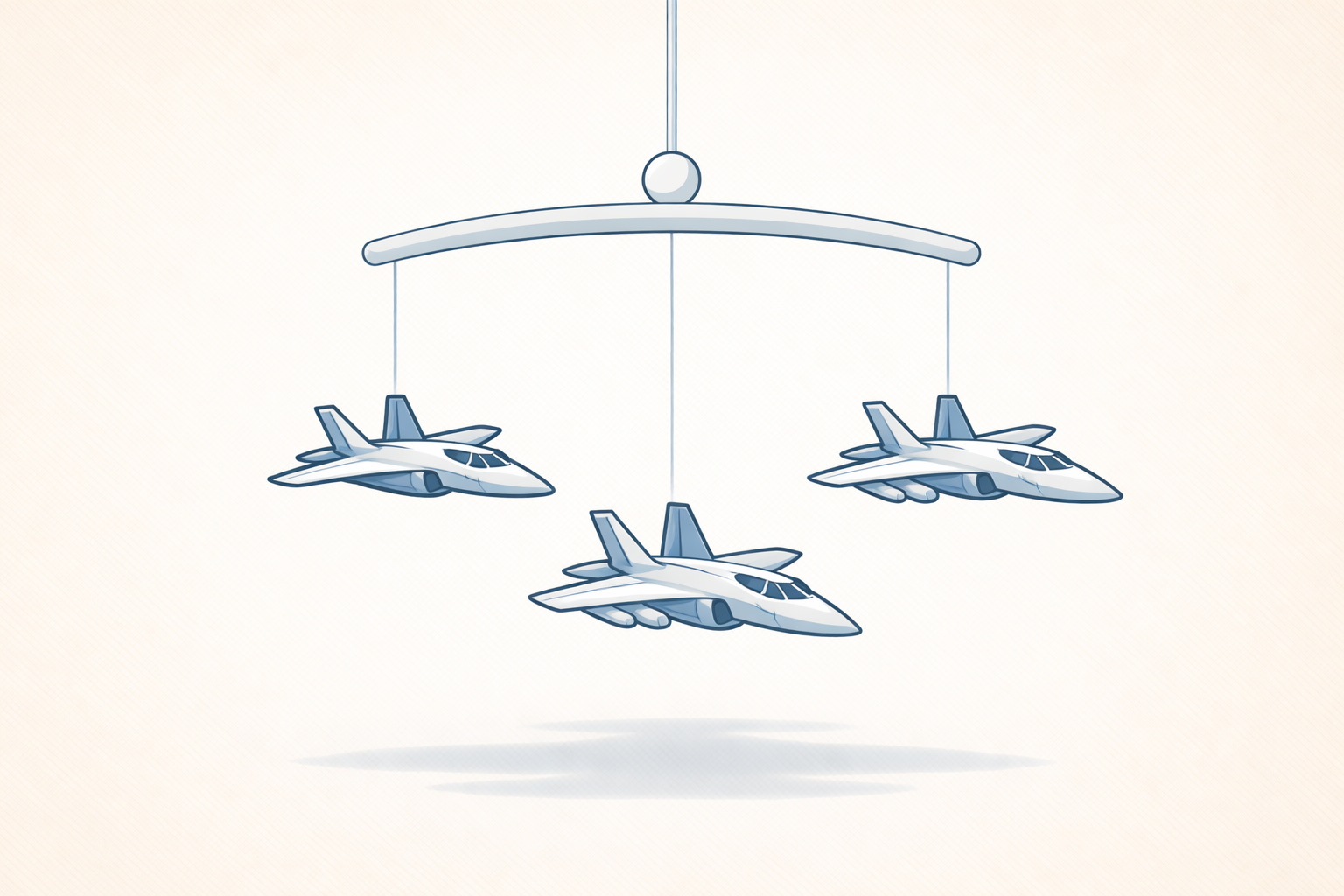
Israel announced it would partially privatize two of its largest defense companies – Israel Aerospace Industries (IAI) and Rafael – both legacy, state-owned companies since their founding in the 1950s.
Why we care: Raising capital through public markets reflects deeper shifts in the U.S.-Israel defense partnership. The US and Israel have begun negotiations on the next generation of a 10-year defense pact, following the current arrangement that provides roughly $3 billion annually in U.S. military support to Israel. At the same time, the Trump Administration has been pressing allies to assume greater responsibility for their own security – from NATO to Asia – and Israel is unlikely to be exempt. PM Netanyahu has also signaled the need for Israel to be self-reliant and phase out U.S. military assistance. The IPOs of IAI and Rafael would inject cash into Israel’s booming defense industrial base which has proven its mettle in battle over the past 2+ years across multiple theaters. As a preview of Israel’s confidence in market demand for its defense sector: Elbit Systems, Israel’s largest defense company by revenue, listed on the NASDAQ since 1996, has seen its shares nearly double over the past two years alone.
1 Policy Shift: US Launches AI Supply Chain Coalition with Middle East Partners
The U.S. State Department launched Pax Silica, a new initiative to form a trusted global coalition – which includes Israel, Qatar, and the UAE – to build, power, and secure the supply chains critical to America’s AI and technology dominance.
Why we care: The coalition also includes Australia, Japan, the UK, South Korea, Singapore, and the Netherlands, with some hints that India will soon join. This so-called “silicon statecraft” adds a formal policy frame to the surge of AI and digital infrastructure investment and partnerships in the region. It also creates a quiet pathway for increased contact between Israel and Qatar, grounded in tech cooperation, and further anchors the Middle East inside a U.S.-led technology and economic security alliance amid the global AI race with China.
1 Source of Friction: Iran saw mass protests alongside an extended internet blackout, a currency in freefall, reports of at least almost 4,000 people killed, and rising external pressure in the form of potential military action and secondary tariffs.
Why we care: No longer episodic unrest, the Iranian regime faces a systemic crisis spanning its legitimacy, liquidity, and coercive capacity. The collapse of the rial and digital shutdowns signal a state prioritizing regaining control over economic functionality, accelerating informal dollarization and capital flight. The threat of secondary tariffs also raises the stakes for Iran’s key trading partners (China, India, Iraq, Turkey and the UAE), potentially shrinking Tehran’s dwindling economic lifelines. Together, internal instability and external pressure sharply increase the risk of miscalculation by Iran or its adversaries.
1 Under the Radar Development: Following the Yemeni government’s capture of Aden on 7 January, the secessionist Southern Transitional Council (STC) reportedly dissolved, effectively ending its role as a coherent political actor.
Why we care: The STC’s collapse will affect Yemen’s internal balance of power in the anti-Houthi coalition, and has cast into relief long-standing Saudi–UAE divergences over the country’s future. A key anti-Houthi interlocutor in southern Yemen is off the board, which may simplify negotiations on paper while raising new questions about representation, local legitimacy, and long-term stability in the south. Yemen’s war hasn’t ended—but one of its most important subplots just did.
1 Fun Thing: Saudi Arabia again hosted the 2026 Dakar Rally—one of the world’s most grueling endurance races—while simultaneously opening Six Flags Qiddiya, home to the Falcon’s Flight roller coaster, set to be the fastest and tallest in the world.
Why we care: This fits into the Kingdom’s broader strategy of large-scale investment in entertainment and culture, alongside initiatives such as LIV Golf, major gaming and esports ventures, professional wrestling events, and global music festivals, and of course the FIFA World Cup, which Saudi Arabia will host in 2034. The Dakar Rally showcases Saudi terrain and logistics capacity, while Six Flags signals a long-term bet on leisure and domestic consumption. These projects won’t replace hydrocarbons, but they do underscore that the Kingdom is a multi-dimensional global destination rather than a single-sector economy.