
RP5: Libya Signs $20bn 25-Year Oil Development Agreement
The Riyalpolitik 5 highlights five recent geo-economic developments across the Middle East that we’re keeping an eye on.
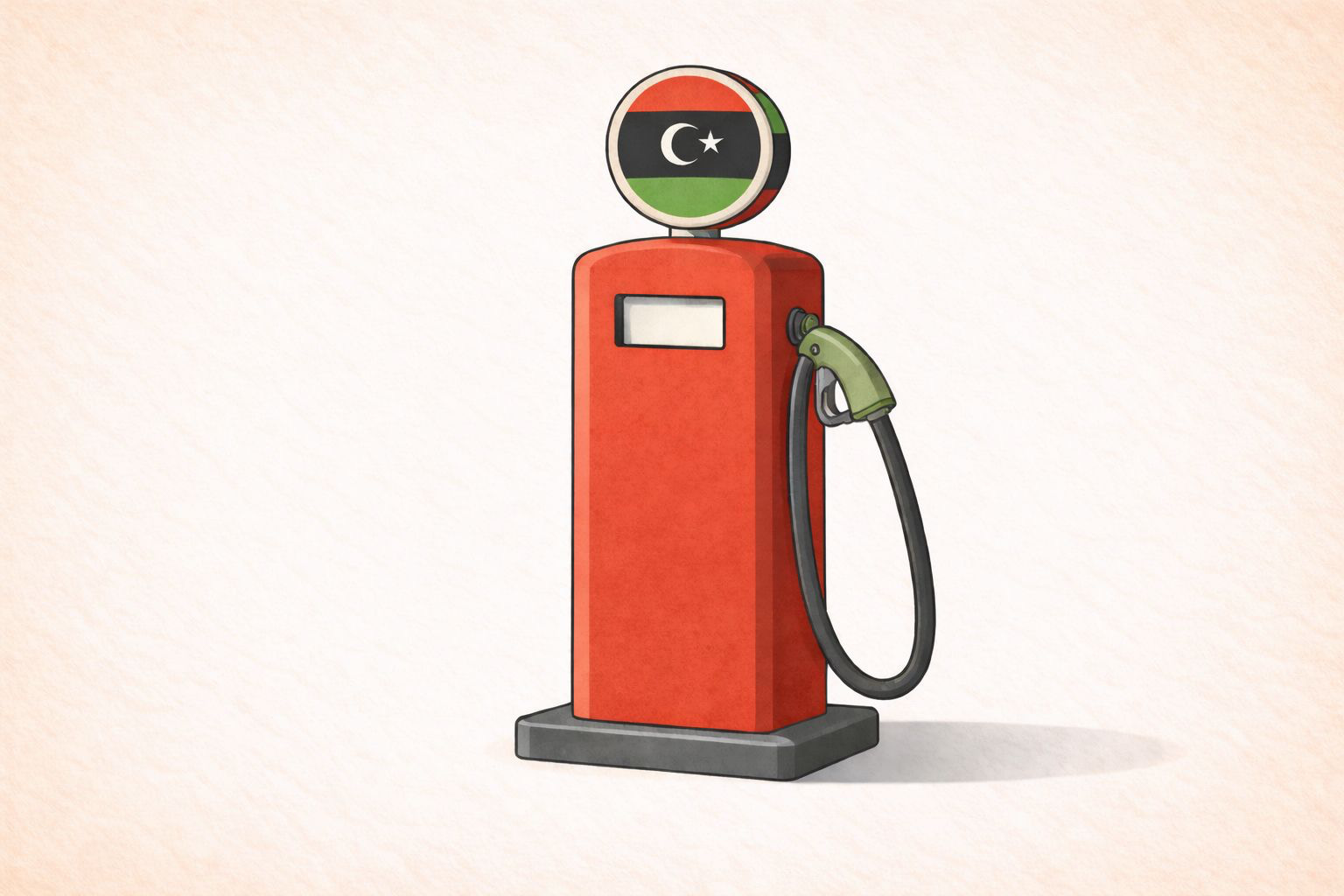
1 Big Deal: Libya Signs $20bn 25-Year Oil Development Agreement: Libya signed a 25-year oil development agreement worth over $20 billion with France’s TotalEnergies and U.S. firm ConocoPhillips to expand production at the Waha Oil Company, a subsidiary of Libya’s state-run National Oil Company.
Why we care: This deal—announced at the Libya Energy & Economic Summit in Tripoli—marks one of the largest foreign investment commitments to Libya’s upstream sector in years and signals a rebound in international confidence after prolonged instability. By aiming to boost capacity toward ~850,000 bpd and generate substantial state revenues over the lifetime of the pact, Tripoli is positioning itself to play a larger role in global energy markets and attract additional Western capital. The memorandum of understanding with Chevron and cooperation agreement with Egypt’s oil ministry reinforce Libya’s pivot toward integrated regional energy engagement.
1 Major Policy Shift: India Signs Free Trade Agreement with the EU: India and the European Union finalized a long-delayed free trade agreement that leaders on both sides called the “mother of all deals” after nearly two decades of negotiations, covering tariffs, services, standards, and regulatory cooperation across most bilateral trade. The deal is designed to accelerate trade flows while aligning the rules that shape how and where companies invest, produce, and source across Europe and Asia.
Why we care: This agreement adds a node to the trade triangle India has been deliberately building. With Comprehensive Economic Partnership Agreements (CEPAs) already in place with the UAE (2022) and Oman (2025), India is building a trade architecture from the Gulf to Europe that will support its export and growth ambitions across the Middle East. More strategically, the deal advances India’s bid to position itself as the world’s preferred alternative to China—as a rule-aligned manufacturing base, logistics hub, and economic partner for Europe and the Gulf at a moment of accelerating supply-chain diversification. While the politics of the India-Middle East-Europe Corridor (IMEC) remain complicated (given Israel-Saudi and intra-Gulf dynamics), India is playing the long game. By locking in trade rules with Europe and the GCC and upgrading ports and logistics infrastructure in partnership with the UAE, New Delhi is building the economic architecture that will expand trade flows through this corridor despite the political ups and downs in the region.
1 Source of Friction: Tensions Between Damascus and Syria’s Kurds: Clashes have flared between Syrian government forces and the Kurdish-led Syrian Democratic Forces (SDF) as Damascus seeks to reassert control over areas long governed with de facto autonomy. Fighting around Aleppo and in the northeast highlights unresolved disputes over military integration, governance, and resource control. The sides have announced a new ceasefire and tentative integration framework, allowing regime forces into Kurdish-held cities, but implementation remains fragile.
Why we care: The standoff underscores a core fault line in Syria’s post-war order: Kurdish autonomy versus centralized rule. How this plays out will shape security in the northeast, control of energy assets, displacement risks, and the viability of reconstruction efforts. This dynamic also creates risk for U.S.-Syria relations. Washington has long backed the SDF as its primary local partner against ISIS and remains deeply invested politically and militarily in Kurdish-controlled areas. Any heavy-handed move by the al-Sharaa government to roll back Kurdish autonomy and sideline the SDF risks triggering friction with Washington, possibly complicating sanctions relief discussions and broader diplomatic re-engagement, including with Türkiye, which is close to al-Sharaa and has fraught relations with Kurdish groups.
1 Under the Radar Development: The possible return to power of Nouri al-Maliki to Iraq: Former Iraqi prime minister Nouri al-Maliki has been nominated by Iraq’s dominant Shiite Coordination Framework as its candidate for prime minister, raising the prospect of his return to power after more than a decade. The move has drawn sharp international attention, with President Trump warning that Washington could end U.S. support for Iraq if Maliki—long criticized for sectarian governance and close ties to Iran—returns to office.
Why we care: A Maliki comeback would reshape Iraq’s internal power balance and likely strain relations with Washington, while reinforcing perceptions of Baghdad’s tilt toward Tehran, at a time when Iran is in dire need of allies. Markets and policymakers will closely watch for shifts in security cooperation, sanctions risk, and access to U.S.-linked financial channels.
1 Fun Thing: Cairo International Book Fair Draws Record Crowds: Egypt hosted the annual Cairo International Book Fair, one of the Arab world’s largest literary and cultural events, drawing millions of visitors along with regional publishers and international cultural institutions.
Why we care: The fair remains a rare mass-participation cultural event in the Middle East. It was often said that “Cairo writes, Beirut publishes, and Baghdad reads” (القاهرة تكتب وبيروت تطبع وبغداد تقرأ) Although cultural and literary production is now more distributed across the Arab world than in decades past, Egypt remains the Arab world’s most populous country and a heavyweight in culture, tourism, and diplomacy. The festival is a reminder of Egypt’s enduring soft-power and appetite for cultural life despite prolonged fiscal strain.
All statements of fact, opinion, or analysis expressed are those of the authors and do not reflect the official positions or views of the US Government. Nothing in the contents should be construed as asserting or implying US Government authentication of information or endorsement of the authors’ views.