

The Corridors that Will Build a New Middle East
The networks now being built to move goods, energy, data, and people will form the foundation for a more connected and stable region.
By Josh Kram
Once upon a time, the Middle East was the central corridor for global trade. The region sits between Asia, Africa, and Europe, and was the only way to move goods from East to West from ancient times until European-dominated maritime routes became the preeminent vehicle for global trade. The Silk Road developed over 1,500 years as land caravan routes converged on Damascus, Baghdad, and Aleppo. Arab merchants controlled the key shipping lanes between the spice producers in Indonesia and India and the Middle East commercial hubs and ports. And the Middle East was more than just a transit hub, it was a value-added center for the global economy. As trade expanded – both in volume and distance – there was innovation around trade finance and facilitation through credit and banking channels, legal systems, and even infrastructure (i.e., roads and inns) to support the flow of goods. Under the Umayyad and especially the Abbasid Caliphates, the region was not only a capital of commerce but also a center for intellectual, scientific, and technological progress.
Today, the Middle East is one of the most economically fragmented parts of the world. Despite its natural geography and long history as a trade hub, the Middle East has among the lowest rates of intra-regional trade anywhere in the world. Rough estimates peg the flow of goods within the region at around 17%, with higher rates within the Gulf Cooperation Council (GCC), compared to Europe (>50%) and Asia (>60%+). While there are a few vestiges of its past as a commercial hub – Dubai International Airport has the largest number of international passengers in the world and the Suez Canal manages 30% of global container trade, by and large, the region’s wars, borders, sanctions, and political rivalries have undermined its power as a commercial bloc.
Yet as what comes next in the Middle East takes shape – with the end of the Israel-Hamas war, reconstruction and nation building, and ambitious Gulf states increasingly asserting larger roles on the global stage – new corridors are emerging to move goods, energy, data, and people around and through the region. As policymakers look to stabilize the region and promote lasting peace, these corridors will serve as critical foundations to link economies, build shared infrastructure, and create complementary dependencies that can weave together a new Middle East.
India-Middle East-Europe Economic Corridor (IMEC)
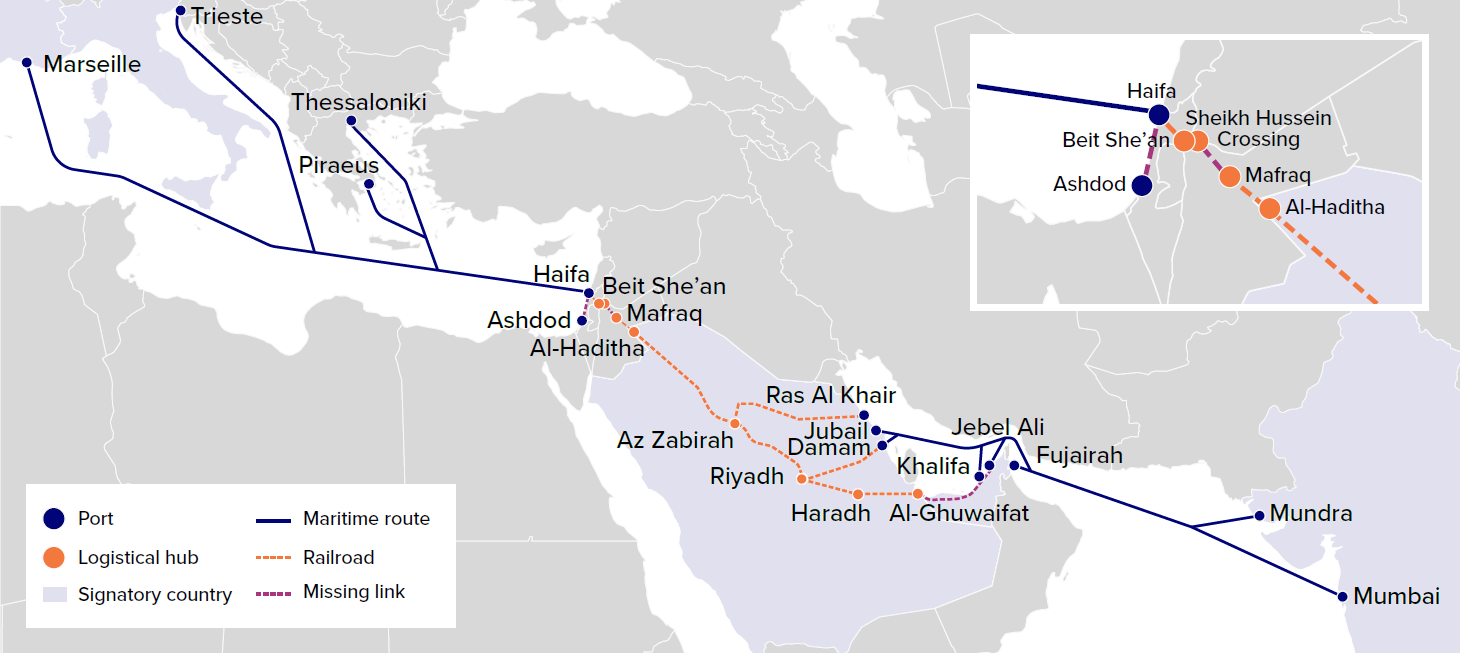
Announced by the G7 in 2023 in New Delhi, this ambitious multimodal trade corridor which includes seaports, railroads, energy infrastructure, and digital connectivity would link India to Europe via Saudi Arabia, the United Arab Emirates, Jordan, and Israel. The vision is to “increase efficiencies, reduce costs, enhance economic unity, generate jobs, and lower greenhouse gas emissions— resulting in a transformative integration of Asia, Europe, and the Middle East.”
India’s Prime Minister Modi sees an opportunity to use this trade corridor to support the country’s “Make in India” initiative by creating a faster, more reliable, and cheaper access to key markets for India’s export-led growth ambitions. IMEC would also ensure India’s access to Gulf energy and build a strategic alternative to China’s BRI-dominated supply chains. This project would also serve the national and geopolitical ambitions of the Saudis and the Emiratis who see themselves as the bridge between the East and the West. During Prime Minister Modi’s visit the White House in February, he and President Trump both reaffirmed their commitment to IMEC and directed their teams to advance it. Since then, the U.S.-India relationship has cooled, triggered by sweeping U.S. tariffs on Indian goods. How the two countries navi so how the U.S. and India cooperate on IMEC will remain to be seen.
Israel isn’t yet part of the IMEC discussions given the political dynamics and the involvement of the Saudis. The U.S. will continue to be a key player in determining Israel’s inclusion and the West’s financial stake in this corridor. While there have been a smattering of MOUs by Indian and Gulf-backed companies to explore project feasibility in IMEC, this corridor is still a diplomatic dream at this stage.
Iraq-Europe Development Road
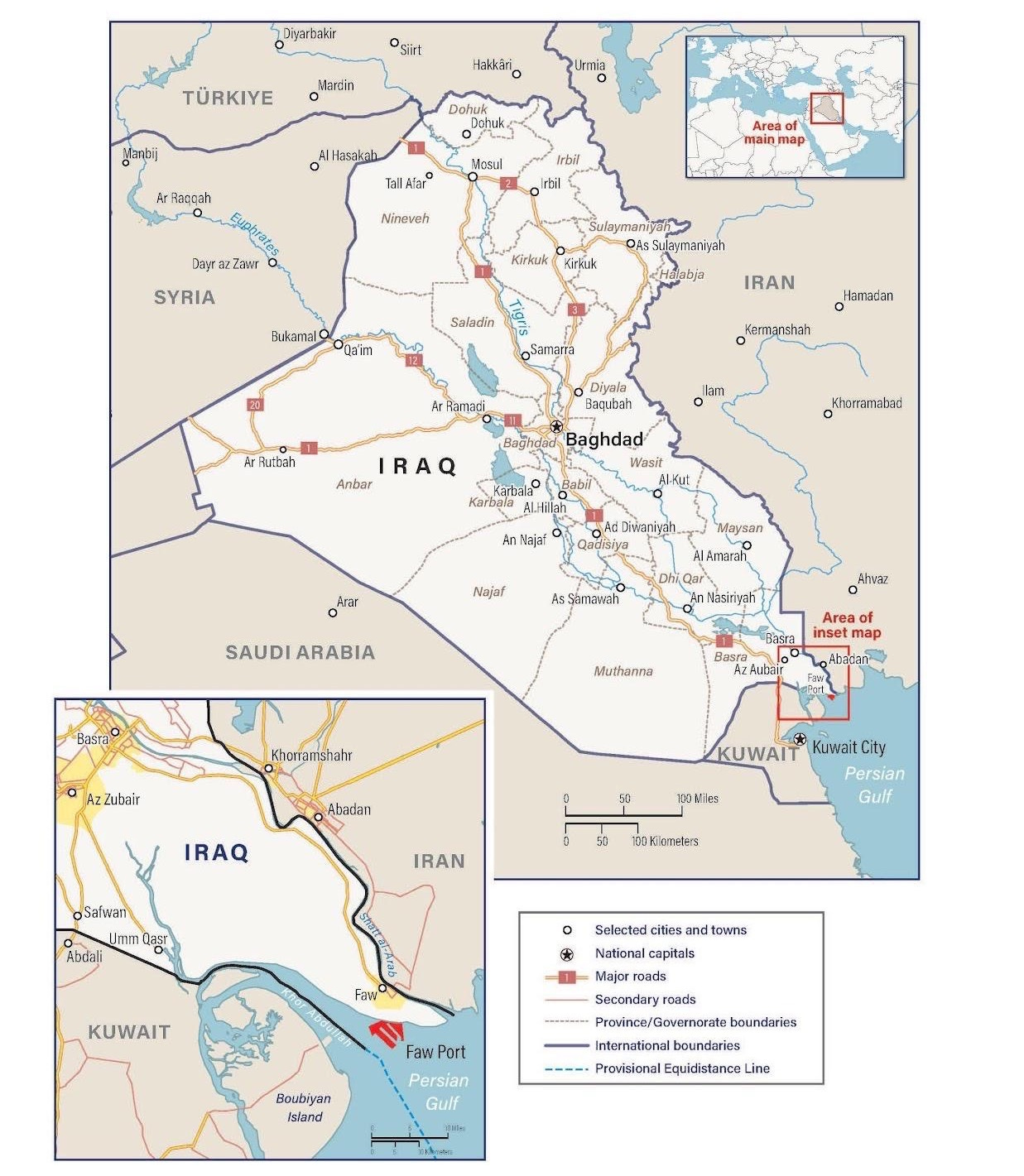

One notable regional power left out of IMEC is Turkey, which is a key backer of an alternative corridor that would link it to the Persian Gulf through a new rail and road transport network across Iraq. This project would give Turkish traders an alternative to the Suez Canal while opening easier access to Iraq’s oil sector and reconstruction economy for Türkiye.
With an estimated cost of $17 billion, Iraq’s Ministry of Transport says that 60% of the project design has been completed and the government is now pivoting to raise investment dollars and find implementers. There continues to be a lot of skepticism about Iraq’s ability to finance and execute a mega-project of this scale, especially given institutional and governance challenges within its bureaucracy, but this corridor is one to watch, especially given Türkiye’s backing and keen interest.
Eastern Mediterranean Basin
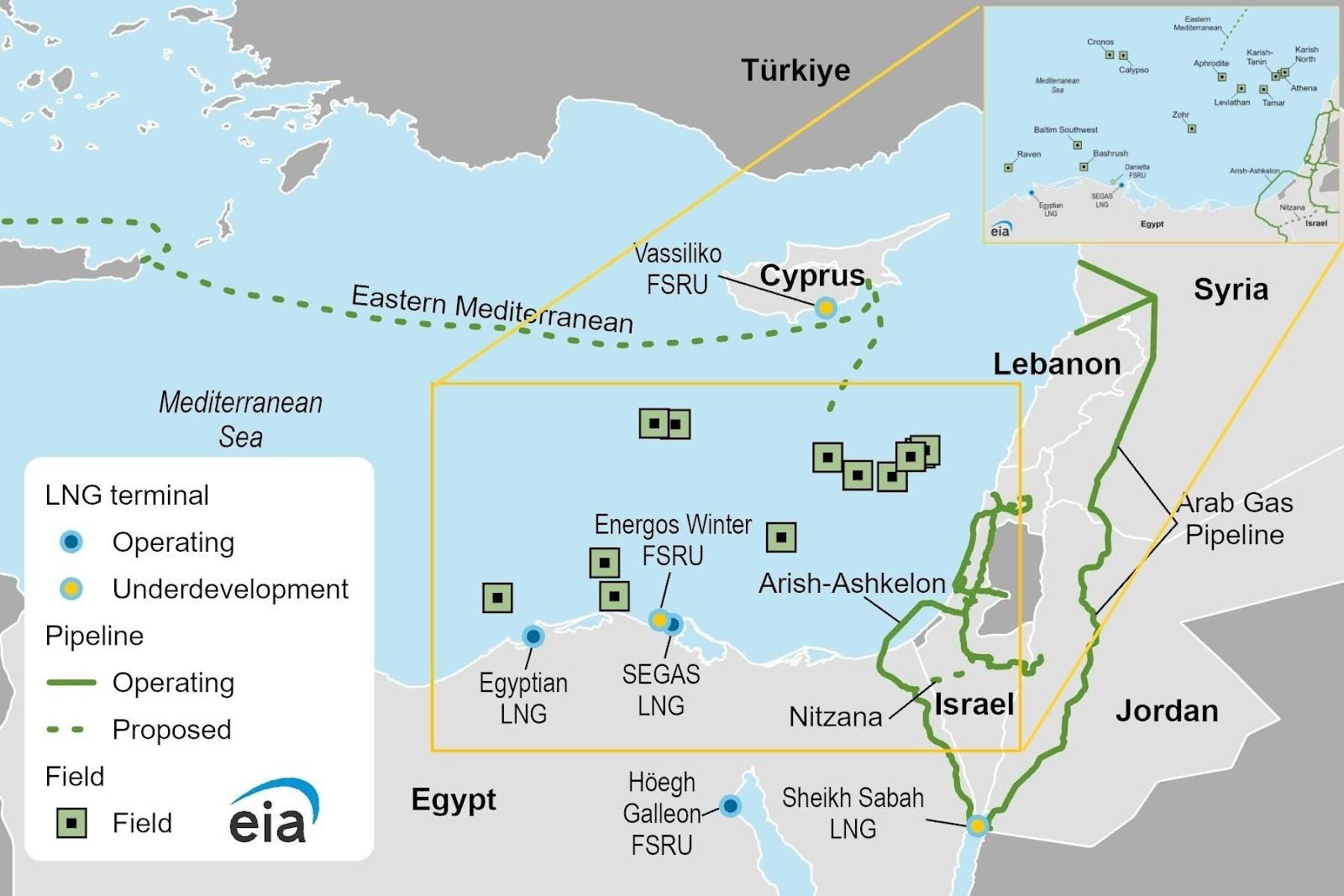
U.S. Energy Information Agency
The world-class natural gas fields in the Eastern Mediterranean – off the coast of Israel, Cyprus, and Egypt – have also turned the region into a vital energy corridor. The reserves have drawn in U.S. and European majors to develop these fields and build the infrastructure to transport the gas to markets in the region and to Europe.
In 2019, the producers and consumers of these resources, including Israel, Egypt, Cyprus, Jordan, the Palestinian Authority, along with Italy, Greece, and France, joined forces and created the Eastern Mediterranean Gas Forum (EMGF), an international organization to promote cooperation. EMGF helped build regulatory convergence among different countries and systems; fostered dialogue on cross-border infrastructure and export frameworks, and laid the foundation for a more interconnected gas market. Even during the height of Israel’s war in Gaza–just last month–Egypt signed a $35 billion contract with the operators of Israel’s Leviathan field to import 130 billion cubic meters of gas from Israel over the next 15 years.
There is both opportunity and demand to further develop these fields. The 2024 agreement to settle the maritime border between Israel and Lebanon, combined with potential shifts in Lebanon’s political and regulatory landscape, could create new opportunities for international energy companies to again explore off the coast of Lebanon. Further south, there are also proven fields off the coast of Gaza. Known as Gaza Marine, this field has remained undeveloped since it was discovered more than 20 years ago but could play an important role as the U.S. and international community work with key Arab leaders on a sustainable economic vision for “the day after”.
A More Integrated GCC
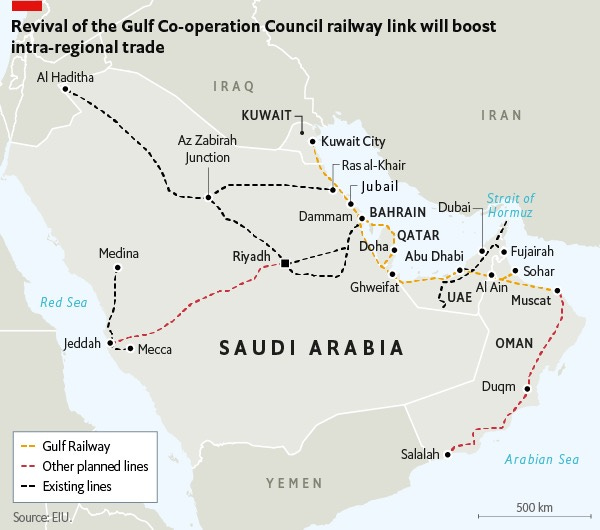
It wasn’t long ago that the simmering tensions among the Gulf states burst into the open when Saudi Arabia, the UAE, and Bahrain (accompanied by Egypt) imposed a full trade and diplomatic blockade on Qatar. The rift reflected a long history of tribal and political competition for regional influence, though officially it centered on Qatar’s foreign policy—particularly its support for Islamist groups such as the Muslim Brotherhood and its longstanding ties with Iran. The move effectively isolated Qatar, closing its only land border, restricting access to Saudi airspace, and severing trade and travel links across much of the region. While there are still tensions and jockeying for primacy within the Gulf Cooperation Council (GCC), there are also efforts to integrate this part of the region with a $250 billion GCC Railway Project which is estimated to be completed by 2030 to connect all six members of GCC countries from Kuwait to Oman. And later this year, for the first time ever, the GCC bloc will also have a unified tourist visa that will grant entry to all six countries through one application.
What else we are keeping an eye on
Digital Corridors The future of trade is also increasingly digital. The Middle East is playing to compete in this new AI era – building data centers, deploying massive amounts of capital into tech start-ups, and building partnerships with leading technology companies from the U.S. and China. At the same time, threats persist: terrorist groups like the Houthis in Yemen have targeted undersea cables in the Red Sea, disrupting internet access to the region. To support these ambitions and to create redundancies for internet connectivity in the region, new subsea and terrestrial cables are being planned and placed, along the routes noted above, and beyond.
Middle East ties to Africa. It is worth watching how the region links up to Africa and what new corridors may emerge in the coming years. African nations are increasingly attractive alternatives for natural resources, production networks, and markets that could support the growth ambitions of the GCC countries. Over the past decade, the GCC has invested over $100 billion in Africa in a range of deals and through distinct investment strategies. Some notable examples: Saudi Arabia recently joined one of the largest pan-African infrastructure investment platforms, signaling intent to support industrial development. The UAE’s DP World operates or has stakes in at least a dozen ports in Africa, anchoring trade corridors linking the continent to global markets. And the UAE’s G42 announced a $1 billion partnership with Microsoft to build digital infrastructure in Kenya, showcasing the ambition of Gulf capital, U.S. technology, and Africa’s potential. Across the Gulf, however, investors and sovereigns alike are looking at ways to position themselves to tap into these emerging markets – the world’s largest free trade zone – through the historic African Continental Free Trade Area signed in 2021.
Iran’s alternative trade corridors. On the other side of the ledger, Iran has been piecing together its economic corridor—leaning heavily on China, Russia, and even North Korea—as U.S. and international sanctions have cut off much of its access to the global financial system. Unable to trade freely with the West, Tehran has turned to alternative routes and partners, signing a 25-year $400-billion pact with China that includes investing in Iran’s industrial, energy, and transportation infrastructure. We recently saw an example of this in the Wall Street Journal exposé that looked at how Iran barters oil for construction deals with China to circumvent sanctions. Earlier this year, the Iranians hosted transportation officials from Iran, China, Kazakhstan, Uzbekistan, Turkmenistan, and Türkiye to discuss developing a transcontinental rail network as well.
China’s Belt and Road corridors that lead to the region. BRI, launched more than a decade ago, is a multi-trillion dollar infrastructure and investment project which includes several corridors that reach toward the Middle East. The most prominent is the China-Central Asia-West Asia Economic Corridor, one of six land routes in China’s original BRI vision, which would be the main line linking China to the Middle East through Central Asia, Iran, and Turkey. China is one of the largest buyers of Middle Eastern oil and gas. For Beijing, these corridors are strategic plays to ensure access to energy, mitigate chokepoints in Western-controlled trade routes, and extend China’s influence in the region.
The end of the Israel-Hamas war — and let’s hope it holds — could accelerate the emergence of new economic corridors across the region. In many ways, these corridors are already taking shape, as countries stake out competing visions over which alignments to join, and what infrastructure to build. The competition for capital will be fierce.
For now, a lot of what we’re seeing is symbolic: broad MOUs, photo ops, and investment conferences. The real story will come in the deals and details of who’s building what, and where. Governments across the region, along with global powers, will push to steer investors toward their own politically aligned corridors, but just like the corridors of the past, these corridors will shape more than trade routes. They’ll define new patterns of influence, connection, and exchange across the region.