

RP5: Chevron Explores Offshore Syria
The Riyalpolitik 5 highlights five recent geo-economic developments across the Middle East that we’re keeping an eye on.
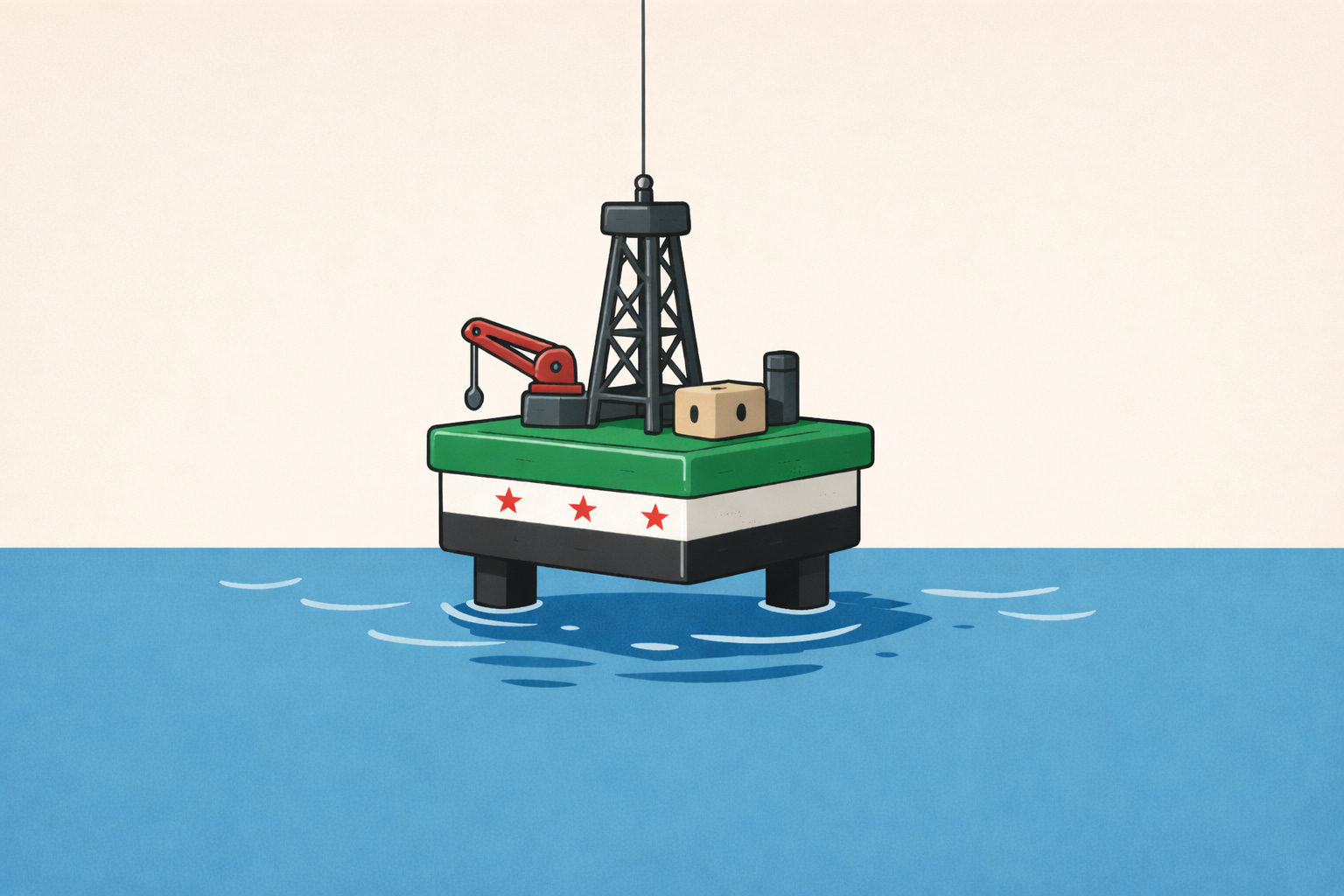
1 Big Deal: Chevron to explore for oil and gas offshore Syria: Chevron and Qatar-based holding company, PIH, signed a memorandum of understanding with the state-owned Syrian Petroleum Company to explore offshore oil and gas opportunities in Syrian waters.
Why we care: This is a tangible test of Syria’s economic reopening. U.S. corporate engagement—particularly in oil and gas—suggests Washington’s policy shift is translating into commercial activity backed by Saudi and Qatari capital. Syria sits within the Eastern Mediterranean basin, which has already delivered major offshore natural gas discoveries for Israel, Cyprus, and Egypt, alongside early-stage offshore development for Lebanon. In recent years, these assets have begun to reshape regional energy dynamics, serving as both commercial resources and catalysts for deeper energy integration. Meanwhile, a consortium of U.S. and Saudi energy companies, including Baker Hughes and Hunt Energy, are exploring onshore in Northeastern Syria. Since many of Syria’s energy assets sit in Kurdish-held territory, the agreement could alter the evolving balance of economic leverage between Damascus and the SDF, while embedding U.S. private-sector interests into Syria’s reconstruction trajectory.
1 Major Policy Shift: Saudi Arabia Expands Defense Industrial Cooperation with Türkiye: Saudi Arabia and Türkiye signed an expanded framework agreement deepening defense industrial cooperation, including joint production and technology transfer tied to drone systems and advanced manufacturing.
Why we care: The move reflects Riyadh’s push to localize defense production under Vision 2030 while diversifying suppliers beyond traditional Western partners. For Ankara, it reinforces Türkiye’s emergence as a major defense exporter across the Gulf. This is less about procurement and more about industrial policy, signaling a shift toward regionalized defense ecosystems. Saudi Arabia is turning to Türkiye in part because Ankara is more willing to transfer technology and co-produce systems than Washington, which remains constrained by congressional oversight and export controls. For Türkiye—a leading regional arms exporter—supplying the Kingdom is both hard power and soft power projection, feeding speculation about alignment between Pakistan, Saudi Arabia, and Türkiye.
1 Source of Friction: Red Sea Security Tensions Resurface: Just as global shipping companies re-start routing vessels through the Red Sea and Suez Canal—including Maersk’s decision in January to resume transits through the Strait of Hormuz and key Red Sea lanes following months of disruption—renewed attacks on commercial vessels prompted additional U.S. and European naval responses and sharper rhetoric from regional actors. The timing underscores how fragile confidence remains: even tentative commercial normalization can be disrupted by a handful of asymmetric strikes.
Why we care: After two years of attacks by the Yemen-based Houthis on international shipping in the Red Sea, one of the world’s most critical trade corridors remains under strain. The route feeding into the Suez Canal is not just another maritime lane. It is a primary gateway (and chokepoint) for global markets, carrying roughly 12% of global trade and serving as a central artery for energy, goods, and supply chains linking Asia, Europe, and beyond. Even limited maritime disruptions raise insurance costs, freight rates, and energy price volatility along one of the world’s most critical trade corridors. The episode underscores how localized militia activity can be disruptive globally, generating systemic economic risk—and how fragile the current deterrence architecture remains, even at a time when two U.S. aircraft carrier strike groups are now in the region.
1 Under the Radar Development: U.S.-Brokered Western Sahara Talks Between Morocco and Algeria: U.S. officials quietly facilitated renewed diplomatic engagement between Morocco and Algeria over Western Sahara, marking the first structured talks over the disputed territory in years between the regional rivals. The last time Western Sahara featured prominently on a Trump administration agenda was in December 2020, when Washington recognized Moroccan sovereignty over the territory as part of Rabat’s normalization agreement with Israel under the Abraham Accords.
Why we care: Western Sahara has long been a frozen conflict with outsized geopolitical implications, shaping Algerian-Moroccan relations, African Union politics, and European energy ties. Even exploratory dialogue reduces escalation risk and signals Washington’s renewed interest in stabilizing North Africa – traditionally more of a priority for the EU than the US – at a moment of shifting alliances and energy recalibration.
1 Fun Thing: Doha Hosts Major International Design & Art Week: Qatar hosted Art Basel Qatar, a large-scale international design and art week that drew global galleries, architects, and cultural institutions to Doha’s expanding museum and creative district.
Why we care: Cultural diplomacy remains central to Qatar’s post–World Cup positioning. Large-format art and design platforms reinforce Doha’s role as a convening hub and signal that soft power investments continue well beyond mega-sporting events. Culture, in this context, is infrastructure.