

Riyalpolitik Middle East Reconstruction Monitor
Tracking plans, capital commitments, tenders, and MOUs across Syria, Lebanon, and Gaza
Since late February, attention has been fixed on the U.S.-Israel war with Iran, a reminder that even as policymakers discuss reconstruction and stabilization in the Middle East, the region remains in a state of prolonged volatility. It was just days before military operations began in Iran that President Trump hosted the inaugural meeting of his “Board of Peace,” aimed at mobilizing resources for Gaza’s reconstruction, a juxtaposition that illustrates how quickly dizzying geopolitical events can overtake diplomatic initiatives in the region. Once this current phase of conflict abates, the region and its partners will again turn their attention to post-conflict recovery and reconstruction—and to grappling with the far-reaching consequences of this war and the broader geopolitical shifts reshaping the region.
Reconstruction — where geopolitics, capital, and business converge — will be a defining domain to watch in the months and years ahead.
In our new Reconstruction Monitor, we are following the full deal lifecycle across Syria, Lebanon, and Gaza: government white papers and strategic plans, memoranda of understanding (MoUs) and joint ventures, bilateral investment packages, donor conferences, concession agreements, and on-the-ground project activity. We are mapping which commitments are real, which are aspirational, and where money is actually moving.
The sticker price is already eye-popping: The World Bank estimates over $200 billion for Syria, $70 billion for Gaza, and $11 billion for Lebanon. Meanwhile, the costs to energy and civilian infrastructure and economic activity in Saudi Arabia, the UAE, Bahrain, Kuwait, Israel, and Iraq, and the ripple effects worldwide, continue to rise – to say nothing of the destruction in Iran itself. Prospects for reconstruction in each of these areas also remains wildly uneven and the politics are far from settled: Hamas still exerts control over much of Gaza, Hezbollah and the Houthis remain entrenched in Lebanon and Yemen, respectively, and none of these groups appears inclined to give up their arms or modify their ideology.
And yet, even amid challenging politics and active conflict, plans are taking shape, capital is moving, and new infrastructure is being designed and financed. Across Syria, Lebanon, and Gaza, multilateral institutions are committing funds, Gulf sovereigns are placing early bets, and international contractors are positioning for entry. The politics are far from settled — but the deal flow is real, and the window for early movers is already opening.
Download the full Riyalpolitik Reconstruction Monitor PDF here.
We’ll also be publishing a fully sourced and regularly updated version on our website soon at www.riyalpolitik.com.
Below, we take each theater in turn:
Syria
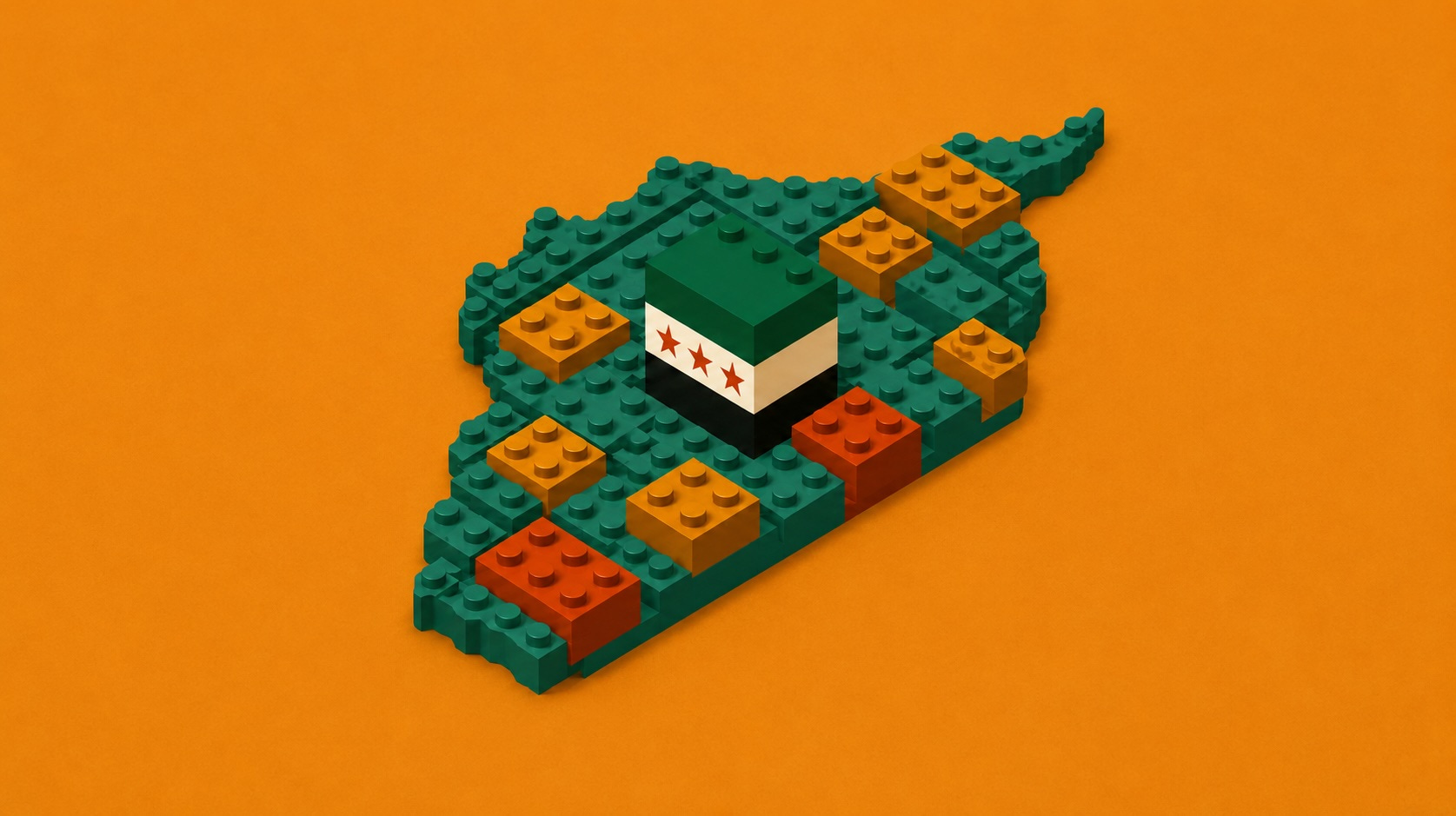
Syria: Drowning in MOUs and needs someone to actually break ground.
Syria is the most active deal-making environment of the three theaters. Since the toppling of Assad in December 2024 and the subsequent lifting of US Caesar sanctions, $56+ billion in foreign investment commitments have been announced, although the gap between MoUs signed and shovels in the ground remains enormous. Qatar and Turkey are leading the pack, Saudi Arabia is heavily involved, and the US is blessing the scene without writing many checks.
SNAPSHOT: After more than a decade of civil war and regime change, Syria could now become one of the largest reconstruction efforts in the world. The World Bank estimates the price tag over $200 billion. With the Al-Sharaa government now backed by Western governments, including the U.S., and early financial commitments from Gulf partners, Syria is the most active reconstruction deal-making environment in the region today. It is also the one most at risk of becoming a cautionary tale about MoUs that never convert into poured concrete.
Since the implosion of the Assad regime in December 2024 and the subsequent lifting of US Caesar Act sanctions, over $56 billion in foreign investment commitments have been announced across energy, ports, aviation, telecoms, and real estate. Qatar and Turkey had been first movers, with Saudi Arabia deploying commercial equity at scale, and the US blessing the scene through large-scale sanctions relief and Chevron’s entry without writing sovereign checks. The headline deals are real: a $7 billion energy consortium, an $800 million DP World port concession at Tartus, a $4 billion Damascus airport rebuild, and $6.4 billion in Saudi sectoral investments. Cumulative Saudi-Syrian agreements now exceed $10.7 billion.
But beneath the fanfare, three structural risks lurk. First, opacity: economic decision-making is reportedly being consolidated within the al-Sharaa family; a Reuters investigation revealed that Ahmed al-Sharaa’s brother, Hazem, until recently ran a covert committee that quietly took possession of $1.6 billion in assets from Assad-era businessmen, and was formally installed as head of Syria’s High Committee for Investment, a position he reportedly left in a recent cabinet shuffle. Second, the Kurdish question: 87% of Syria’s oil production remains in previously SDF-controlled areas in the northeast, and until Damascus reaches a durable political settlement with the SDF, the energy sector’s commercial potential is effectively locked. Third, Israel’s periodic ongoing strikes and occupation of southern buffer zones create investment risk that no due diligence can fully price.
THE SO-WHAT FOR INVESTORS: Follow the energy sector as the leading indicator. If the Qatar-Turkey-SOCAR gas supply chains stabilize, UCC’s power plants break ground on schedule, and the SDF integration deal holds, Syria’s reconstruction has genuine momentum. If Kurdish tensions flare, al-Sharaa’s centralization generates a governance crisis, or the State Sponsor of Terrorism (SST) designation remains beyond 2026, the $56B pipeline could easily stall. The SST designation removal, still unresolved as of this writing, remains an important policy unlock to watch. Untouched by Caesar Act relief, its lifting could trigger the removal of dollar-clearing restrictions, US corporate investment prohibitions, and multilateral lending constraints that prevent Syria’s announced reconstruction commitments from converting into actual capital deployment at scale.
Lebanon
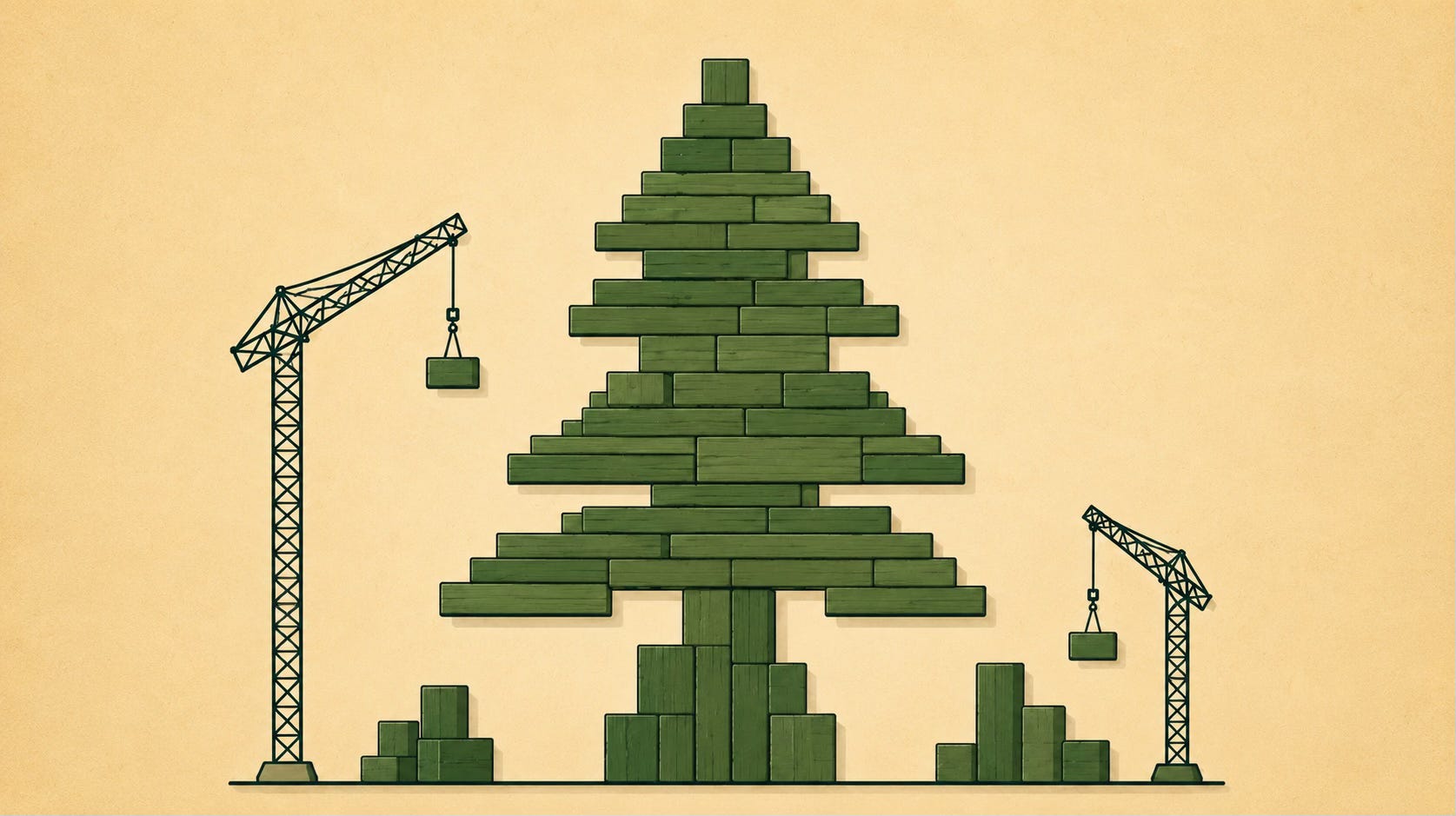
Lebanon: Has a window - but Hezbollah is racing to close it.
Estimates for Lebanon’s reconstruction, which range from $5-11 billion, point to a country that actually has a functioning (if fragile) new government. President Joseph Aoun and PM Nawaf Salam represent the first reform-credible Lebanese leadership in years, and Gulf states are cautiously re-engaging the country for the first time in a decade.
SNAPSHOT: Lebanon was a thriving cultural and commercial capital of the Middle East before a 15-year civil war and decades of regional conflict. The sharp sectarian divides between the Maronite, Shia, Sunni, and Druze communities have been compounded by successive cycles of conflict, first between Israel and the PLO in the 1980s, then Israel and Hezbollah from the 1990s through today. The resulting political and economic dysfunction has left Lebanon’s lira (pound) severely devalued, its public institutions weakened by corruption, and its political system long gridlocked around sectarian divisions.
Against that backdrop, Lebanon enters 2026 with its first reform-credible government in over a decade — President Joseph Aoun and PM Nawaf Salam, elected in January-February 2025 — and an estimated $11 billion in reconstruction needs concentrated in the south and Beirut’s southern suburbs following the 2024 conflict. The political breakthrough has unlocked cautious Gulf re-engagement after nearly a decade of estrangement: Saudi Arabia has pledged conditional reconstruction support and the UAE lifted its travel ban in May 2025, which was put back in place one year later. Lebanon’s reconstruction window is real, but the timeline is not unlimited.
Progress hinges significantly on Hezbollah’s disarmament. The Lebanese Armed Forces declared Phase 1 complete on January 8, 2026, establishing a state monopoly on arms south of the Litani, although Israel maintains border positions and has continued strikes, while Phase 2 north of the river remains unresolved. The situation deteriorated sharply when Israel launched extensive airstrikes on Beirut on April 8, killing more than 350 people, before a U.S.-brokered 10-day ceasefire on April 16 opened the door to the first direct Israel-Lebanon negotiations since 1993. This potentially major diplomatic development remains contested by multiple parties.
The central reconstruction dynamic is a competition between the state-led track — built around the World Bank's $360 million southern package (LEAP’s $250 million first tranche of a $1 billion framework, plus €75 million from Agence Française de Développement (AFD) and €35 million in EU/France/Denmark grants), prospective Gulf capital, and the IMF reform process — and Hezbollah's longstanding parallel $3 billion Waad Project, which has prioritized southern communities. Both tracks are aware that delivery speed and visibility in the south will shape the political landscape for years to come.
THE SO-WHAT FOR INVESTORS: In spite of Lebanon’s functioning government and genuine reconstruction opportunity, two structural gaps remain: (1) without an IMF program, Lebanese banks cannot process reconstruction fund transfers at normal terms and depositors remain subject to informal withdrawal limits of $400-500/month, and (2) without durable security de-escalation, project risk premiums remain elevated across the board. The key signals to watch are a staff-level IMF agreement — the single most important reconstruction catalyst available — and whether Gulf capital moves from pledge to deployment in the months ahead.
Gaza
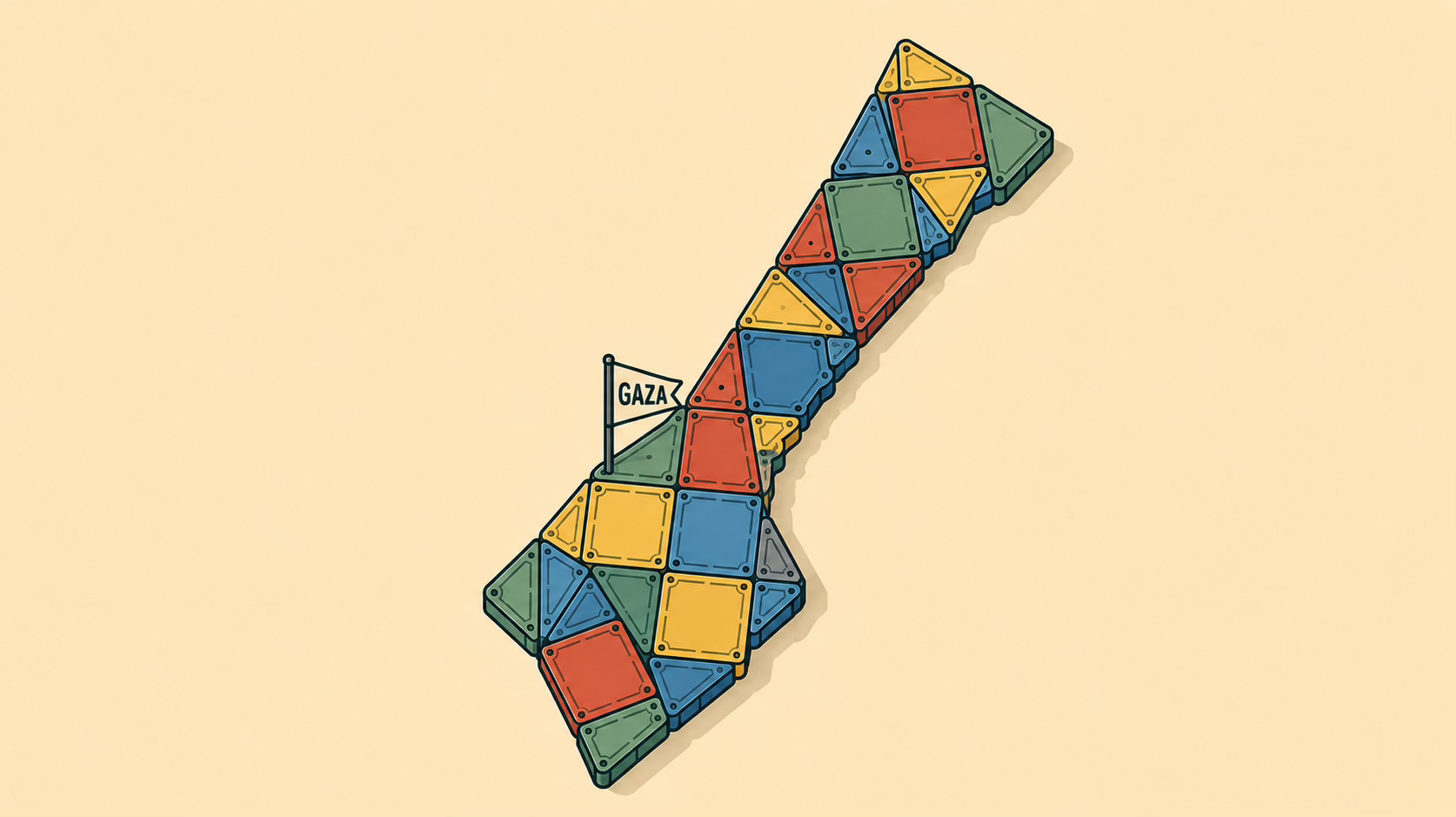
Gaza: Paralyzed by governance, not money.
More than 80% of all structures in the Gaza Strip have been damaged or destroyed and the security and political situation remains unresolved. Just prior to the US-Israel war with Iran, President Trump hosted his first formal meeting of the Board of Peace with grand visions and an ambitious fundraising campaign for Gaza’s rebuild. Gaza is plagued by competing, and conflicting, visions for what comes next, with Hamas still effectively governing around 50% of the Strip. Thus far, the focus has remained on rubble removal and humanitarian assistance, but the short-term prospects for action in this theater remain dim.
SNAPSHOT: The Gaza Strip faces $70 billion in reconstruction needs across a territory where 84% of structures are damaged or destroyed. A fragile ceasefire signed in Sharm el-Sheikh in October 2025 has enabled limited rubble clearance and humanitarian access, but actual reconstruction remains paralyzed by unresolved governance and an active debate over who controls Gaza. The IDF still maintains a large presence in the Strip with Hamas continuing to serve as the de facto ruling entity in much of Gaza. The Board of Peace (BoP), a coalition led by the U.S. (chaired by Trump) to oversee security and reconstruction, is being led day-to-day by Bulgarian diplomat Nickolay Mladenov, no stranger to the Gaza reconstruction portfolio, who is working to implement the White House’s 20-point Gaza peace plan, beginning with disarming Hamas. The BoP has no enforcement mechanism, no agreed funding structure, and faces skepticism from Arab states, the UN, and the PA, all of which have questioned its legitimacy and independence from Israeli and US political objectives.
The governance void is Gaza’s most urgent reconstruction need. No other theater suffers this problem as acutely. In Lebanon and Syria, there are governments — however imperfect — to sign contracts and receive funds. Instead, Gaza has a ceasefire, a $70B price tag, and a radioactive political vacuum that every external actor is trying to fill on their own terms. The competing plans tells the whole story: the US is pitching “Project Sunrise” (a $112B, 20-year Witkoff-Kushner production that includes monetizing 70% of Gaza’s coastline by Year 10), Egypt is pushing a $53B Palestinian Authority-led plan, the PA has its own $67B proposal, and Israel is quietly advancing “Alternative Safe Communities” that would effectively partition the territory.
For their part, the Gulf states — the only actors with the capital required — are awaiting political clarity, which likely means Hamas disarmament plus PA reform at a minimum. Meanwhile, Qatar and Turkey are being watched with suspicion in Jerusalem, Riyadh, and Abu Dhabi, given both countries’ close historical ties to Hamas. Meanwhile, the only concrete progress on the ground is UNDP rubble clearance (120,000+ tonnes removed) and Qatar-financed debris clearing on main roads.
THE SO-WHAT FOR INVESTORS: Gaza reconstruction money does not appear likely to flow at scale in 2026, especially given the degree of volatility surrounding the Iran war. We are watching for whether the National Committee for the Administration of Gaza (NCAG) gets off the ground, whether Hamas disarms (spoiler alert: it won’t), and whether the US-Israel “Alternative Safe Communities” model advances — because if it does, it could spell a de facto partition that will reshape which parts of Gaza ever see reconstruction funds.
THE BIGGER PICTURE: We’re watching the developments around reconstruction closely because these deals can tell us a great deal about where and how the region is actually changing. Where capital is being allocated, which projects move quickly, which stall, and what ultimately gets built on the ground. This is one critical way in which the Middle East’s new economic map will take shape: project by project, corridor by corridor, deal by deal.