

Economic Realignment Undermining Iran’s Influence
Iran's economic grip in its weakened 'Axis of Resistance' could be starting to slip.
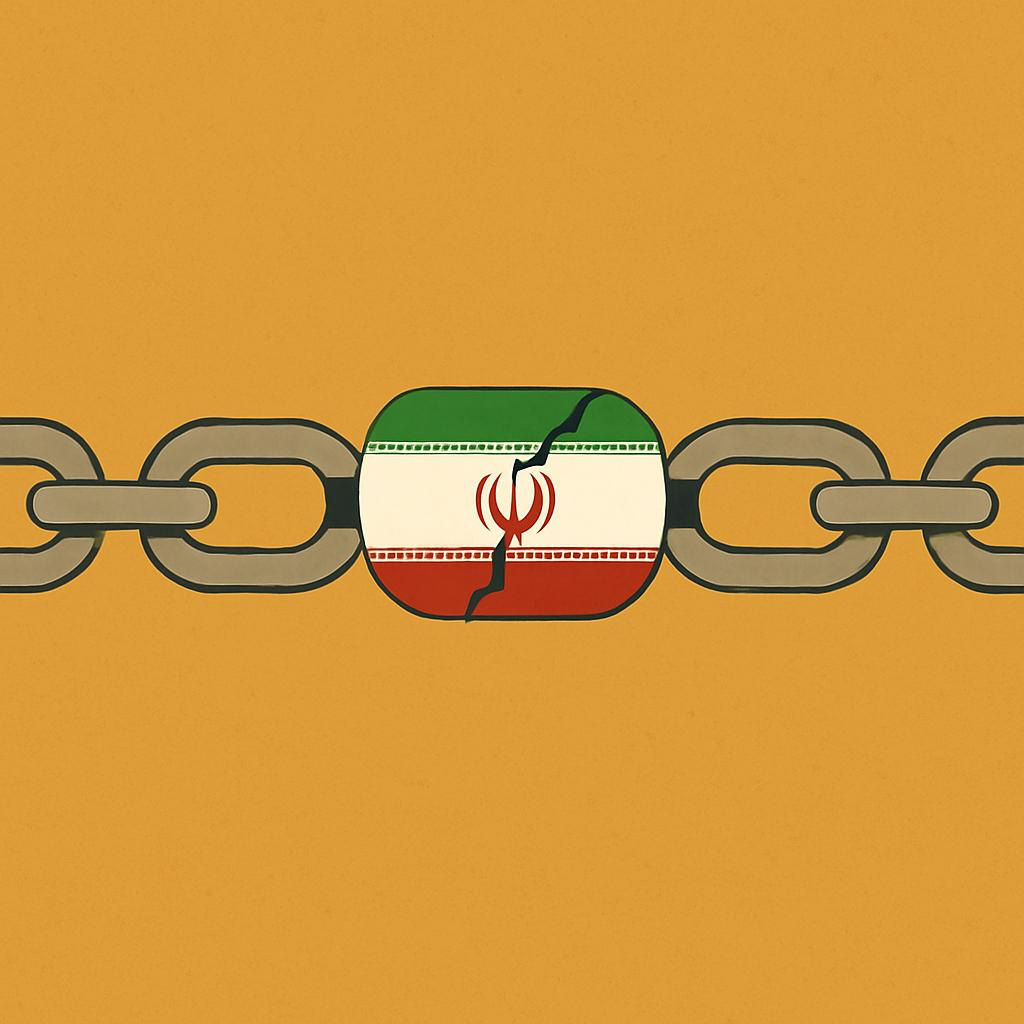
Following this summer’s 12-day war, a great deal of attention has been paid to the fate of Iran’s nuclear and ballistic missiles programs. Rightfully so. These are important regional and international security problems. Much analysis has also focused on the turmoil within Iran’s erstwhile Axis of Resistance, especially given Israel’s decapitation of the top operational and military leadership of Hamas, Hezbollah, and the Islamic Revolutionary Guard Corps (IRGC). Yet a series of quieter economic changes, several of which had roots predating the 10/7 attacks, have been equally debilitating to Iran’s power projection in Iraq, Syria, and Lebanon.
Iraq
For many years, Iraq was a site of Iranian sanctions evasion. For example, in 2020, the US Treasury Department designated Iran’s ambassador to Iraq — a general in the IRGC’s Qods-Force (QF) and a close advisor to Qasem Soleimani — for exploiting his position to obfuscate financial transfers conducted for the QF’s benefit. For years, banks closely affiliated with Iran-aligned Iraqi militias engaged in trade-based money laundering to take advantage of the so-called ‘dollar auction,’ in which various commercial banks in Iraq managed to obtain U.S. dollars shipped to the Central Bank of Iraq (CBI) from the Federal Reserve through an elaborate system of cash withdrawals and electronic wire transfers.
The CBI, however, put an end to this program in 2025, raising the compliance burden for the militias and other malign actors. Entities wishing to import goods into Iraq must now establish correspondent relationships with foreign banks, meeting the anti-money laundering and countering the financing of terrorism scrutiny those relationships require. Given the two countries’ longstanding religious, cultural, and political ties, this is likely not the end of Iranian interference in Iraq. The Islamic Republic has been known to cut its natural gas supply to Iraq – which generates about a third of Iraq’s electricity – at times to prioritize its own domestic gas needs and at others as political leverage over unpaid energy bills.
Syria
The Assad Regime’s implosion in late 2024 brought with it the end of the labyrinthine Syria sanctions regime. Following President Trump’s Riyadh trip in May, a swath of U.S. economic restrictions were reversed in short order: all Syrian financial institutions – including the central bank – are now removed from OFAC’s specially designated nationals (SDN) list; Hay’at Tahrir al-Sham (HTS), which announced its dissolution in January, is no longer designated as a Foreign Terrorist Organization; the Caesar Act, which codified Syria sanctions into law, was rescinded until November, and; export controls on the country have been lifted. The new Syrian military has also confronted Hezbollah on several occasions. Syria’s days as an Iranian ally are in the past, although given it still owes crushing debts to Iran (and Russia), which exceed its GDP and by some accounts are between $30-50 billion, it is unclear how Iran might seek to convert this debt into strategic leverage.
The deals that have shaped Syria’s reconstruction thus far exemplify the shifting balance of power. Turkey – a close ally of Syrian President Ahmed al-Sharaa’ – has not hesitated to play a large role in Syria’s rehabilitation, including deals to export 900 megawatts of electricity to Syrian households by Q1 2026, train and equip Syria’s armed forces, export natural gas from Azerbaijan to Aleppo via its border with Syria, and revive a free trade agreement suspended in 2011. The Gulf states have been similarly active. In July, the UAE’s DP World, a subsidiary of Dubai World, signed an $800 million, 30-year deal to develop the Mediterranean port of Tartous, and it was reported in August that the UAE’s National Investment Corporation would fund a $2 billion subway system in Damascus.
For their part, Saudi Arabia and Qatar have generously repaid Syria’s World Bank loans to enable fresh lending and have pledged to pay public sector wages. Riyadh in particular has taken a leading role in reconstruction, pledging $6 billion of public and private sector investments, although some estimates place the current cost of reconstruction closer to $500 billion — not a pittance. Mohammed Abunayyan, one of the Kingdom’s most influential businessmen, is set to head a joint Saudi-Syrian business council. Saudi Arabia has pledged at least $6 billion of foreign investments in Syria while lower oil prices have forced it to curtail some of its ambitious giga-projects, suggesting these investments are as geopolitical as they are economic, with Iran on the outs.
Lebanon
The tables are also turning in Lebanon. In the span of months, Israel decimated Hezbollah’s senior operational leadership, including the strike that killed the group’s longtime secretary general Hassan Nasrallah. Lebanon now has a new President and Prime Minister who are committed to the country’s sovereignty, long contested by nonstate actors such as Hezbollah and other sectarian militias. In addition to Hezbollah’s military setbacks, Lebanon has been undergoing a series of dramatic financial and economic changes aimed at introducing meaningful reform and accountability. Taken together, these changes are likely to make the country less hospitable to Iranian exploitation.
First and foremost, central bank governor Riad Salameh — who ran the Banque du Liban (the central bank) for three decades — was referred in April by a Lebanese judge to court for trial for the alleged embezzlement of $44 million of the BdL’s funds (Salameh also faces numerous charges for money laundering, tax evasion, illicit enrichment, and forgery). This summer, Lebanon passed a law to reform its defunct financial sector, which collapsed during the country’s 2019 economic meltdown during which the lira lost over 90 percent of its value and an estimated $70 billion of bank deposits were wiped out. This is a key step in unlocking funds to rehabilitate areas devastated by the latest round of conflict. In July, BdL Governor Karim Souaid issued a directive banning local banks and financial institutions from dealing with al-Qard al-Hasan (AQAH). First designated in 2007, AQAH purports to serve the Lebanese state, but in practice is a front for Hezbollah to gain access to the international financial system through shell accounts and facilitators, providing bank-like services while evading proper licensing and regulatory supervision, according to the US Treasury Department.
Lebanon’s efforts to disarm Hezbollah are commendable, but the group is resilient and its financial footprint is global. Recent press reporting suggests Iran, possibly in anticipation of another round of conflict, may be funneling cash through smuggling routes in Iraq and Syria to Hezbollah. In August, ‘Ali Larijani – Secretary of Iran's Supreme National Security Council and the most senior Iranian official to visit Lebanon since the country endorsed the U.S. roadmap to disarm Hezbollah – was warned by Lebanon’s President and Prime Minister against interfering in Lebanon’s internal affairs, illustrating how the tide may be turning.
The above summary, while not exhaustive, sheds light on the new fault lines coming into shape through new political and economic dealmaking. A future post will look more closely at how, in light of these developments, the regime in Tehran is trying to recoup its losses inside the Middle East and more broadly.
All statements of fact, opinion, or analysis expressed are those of the author and do not reflect the official positions or views of the US Government. Nothing in the contents should be construed as asserting or implying US Government authentication of information or endorsement of the author’s views.
 |
|